

Occam’s Razor
I heard about a principle in philosophy recently called Occam’s Razor. It’s one of those phrases that I’d heard smart people say and always nodded my head as if I had a clue what they were talking about. But I looked it up the other day and apparently it means that when you’re faced with competing explanations for something, the simplest one is usually correct.
I like that.
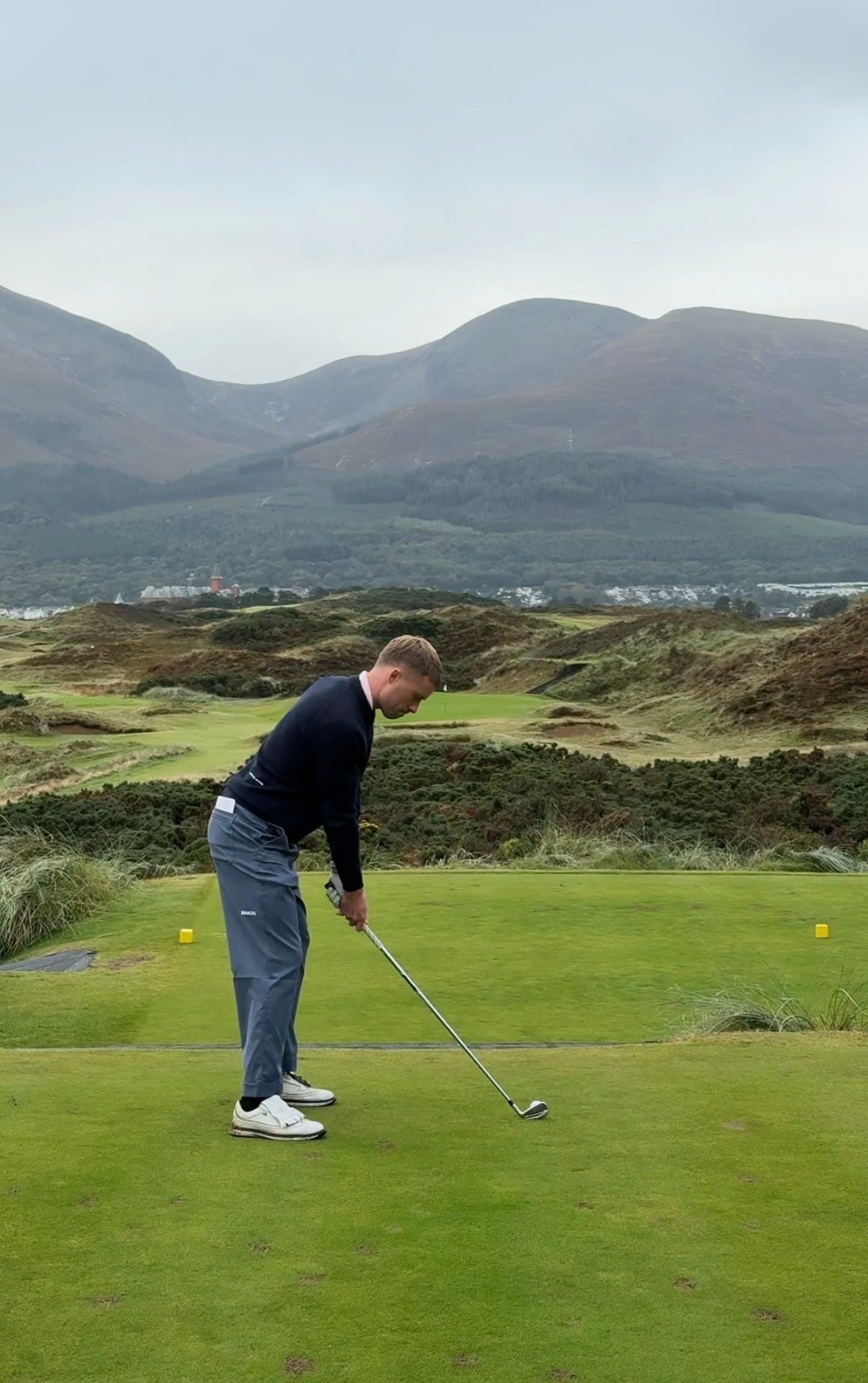
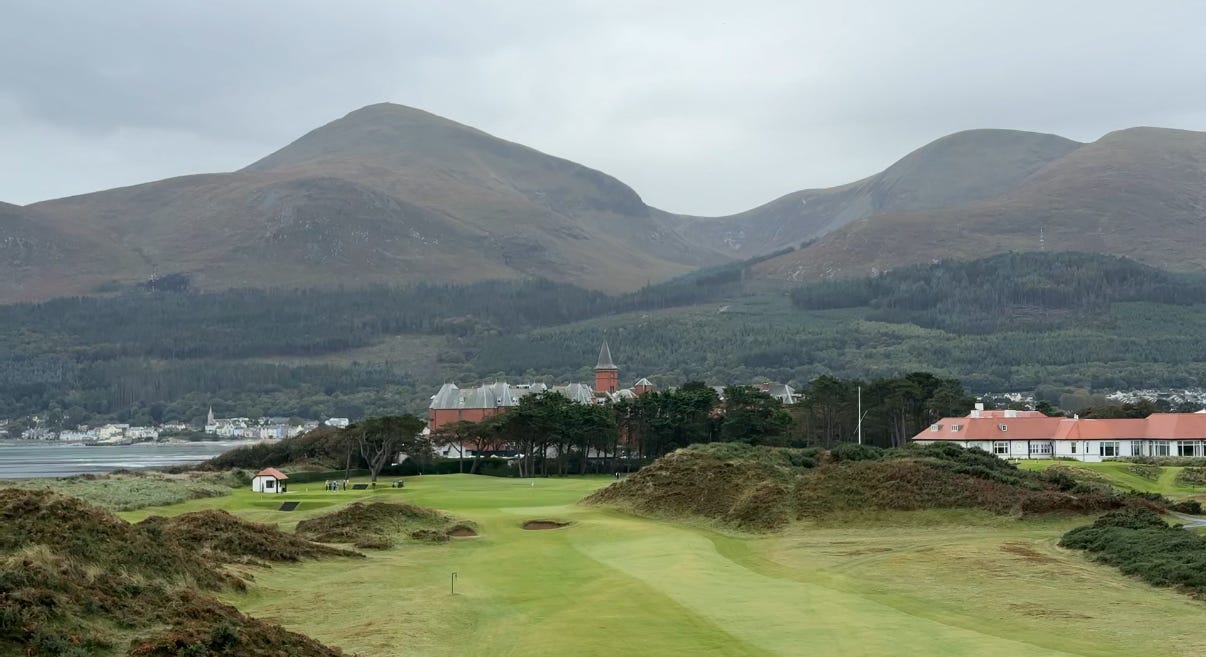
I had the privilege of playing Royal County Down a few days ago and it was definitely that - a privilege. You get out of your car and look up at the clouds resting on the Mourne mountains that tower over you and look out to Dundrum Bay which runs alongside the opening few holes. The clubhouse has one of those reddy/orange roofs that you only seem to see at top golf clubs. It’s one of those really special places for anyone who loves their golf.
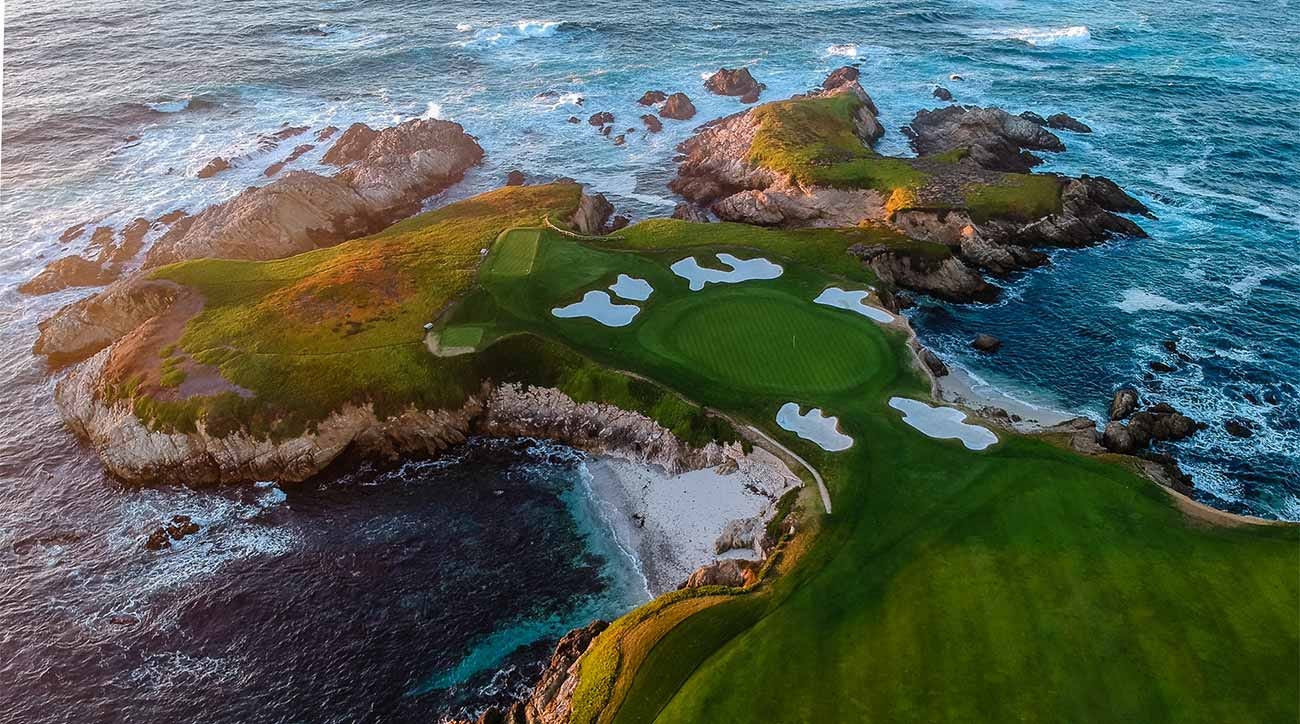
RCD has quietly held its place right at the top of the world rankings of the very best golf courses in the world for years. It exchanges the top 3 places in the world rankings with Cypress Point in California and Pine Valley in New Jersey.
Panels of architects, professionals and serious golf writers keep putting it at the top of their lists.
But a lot of golfers I speak with say that they don’t even believe it’s the best golf course in Ireland. They will tell you the blind shots are a flaw. They will tell you the back nine drops off. They will tell you it’s overrated. Some will even suggest that its reputation owes as much to golf snobbery as it does to the quality of the course itself.
In fairness, Irish golf has set a high bar - courses like Lahinch, Ballybunion, Portrush, Tralee, Rosapenna St.Patrick’s etc… all deserve to be in that conversation. I love all of those courses and it can be fun having these little debates.
But it’s worth asking the question - is Royal County Down ranked highly by the golfing elite who are trying to pretend they know something the rest of us don’t or is it actually just that good?

Intellectual Posturing
A couple of weeks ago I strolled into my local bookshop in Wicklow town and bought Crime and Punishment by the famous Russian author Fyodor Dostoevsky. I’ve heard quite a bit about this book over the years - it’s a book loved by intellectuals and I felt a bit pretentious walking up to the counter as the lady scanned the books for me (I also bought a book by Ernest Hemingway the same day, who do I think I am). I’m working my way through it, I’ll report back with my findings but so far so good.
I feel there’s a sense that people who read these types of books like to talk about reading these types of books - the irony is not lost on me that I’m talking about it publicly in this article.
Maybe there’s a version of reading Crime and Punishment in golf terms. A certain kind of ‘golf snob’ who loves Royal County Down in the same way a certain kind of literary snob loves Dostoevsky - not because they have genuinely wrestled with why it is great, but because saying so makes them feel sophisticated.
Maybe.
But going back to Occam’s Razor, I wonder is the simplest explanation for all of this, that Royal County Down is actually just the best golf course in Ireland and top 3 in the world like the panelists and writers all say it is?
We can all be quick to make snap judgements and offer our opinion. We can and should always be able to avail of free speech so we absolutely should be able to ask that question and give our thoughts.
But what if we just approach these types of things with genuine curiosity. Humility.
Maybe the literary experts and the golf panelists are actually onto something. Maybe they say Royal County Down is a top 3 golf course in the world because it actually is a top 3 golf course in the world.
I’m 33, what do I know?
So when I played RCD the other day (it was my 2nd time playing it) I tried to approach it with that attitude - I really did my best to look around and try to understand, why is this place so highly thought of?
So the question becomes, is Royal County Down just a course that golfing intellectuals love or is it actually the best golf course in the world?
The course the world could not reach
In the 1970s and 1980s golf and great golf courses were starting to be seen by the world.
The Open Championship and The Masters were on television. Courses like Augusta National and St Andrews and Pebble Beach were becoming famous around the world. For the first time in history the average golfer could dream about travelling to play the great courses of the world. Golf tourism was becoming a thing.
Royal County Down was, by those who got to play it, considered one of the finest links courses in the world during this period. The people who knew, knew. But the people who knew were a very small number.
Because Northern Ireland was, understandably, not as popular a tourist destination as it is today.
‘The Troubles’ as we call them around these parts, had begun in the late 1960s and for the next 30 years the north was largely cut off from the golf pilgrimage that was opening up the rest of Ireland and Scotland to the world. While Ballybunion and Lahinch and Turnberry and St.Andrews were receiving visitors and building international reputations, Royal County Down sat quietly on the shores of Dundrum Bay with the Mourne Mountains behind it and very few came through the gate. It was talked about in hushed circles but not everyone knew about it.
It did not benefit from the boom in the same way other courses did. It did not get the marketing that Augusta did every year. It did not host an Open Championship and maybe never will.
But then, thankfully the peace process took hold in the 1990s and people started making the journey north.
As international travel became easier and golf tourism continued to grow, Royal County Down attracted increasing attention. Its reputation spread through the people who played it, the golf writers who documented it and the professionals who experienced it for themselves.
Butch Harmon was among those who sang its praises, and Tiger Woods and other top American players also made the journey. Their appreciation helped reinforce a reputation that had been building quietly for years.
I don’t know about you, but when Butch Harmon speaks, I usually listen.
Occam’s Razor.
RCD doesn’t host many events - neither do Cypress Point or Pine Valley
It is worth noting that none of these three courses regularly hosts the biggest professional major championships. Royal County Down has never hosted an Open Championship. Neither Pine Valley nor Cypress Point have ever hosted a US Open or PGA Championship.
Hosting a major is great for marketing - the timesheet fills up for years before and after with people wanting to play the same course as the best players in the world. But it is also a hassle. The course is out of action for months in prime season and the land takes a beating. I played Portrush after the Open last year and, as beautiful as it was, I could see the staff working hard to restore it after 200,000 spectators had walked the land.
But Royal County Down, Pine Valley and Cypress Point do not need the marketing.
I heard it said once (by Steve Jobs I think), people only sell if they can’t market and people only market if they can’t build a brilliant product.
These courses speak for themselves.
The blind shots
The most common criticism of Royal County Down is the blind shots.
There are several holes where you cannot see where you are going off the tee. You pick a marker post on top of a dune, commit to your line and swing. The critics say this is a design flaw. That a great golf course should show you the challenge ahead and let you make a decision. That hitting blind is a relic of a less sophisticated era.
Here is what I think when I hear that argument.
When the course was first laid out in 1889 there was no heavy machinery. Moving those dunes was simply not possible. Old Tom Morris was invited to advise on the original course, and Harry Colt would later make significant changes to the layout. They would have stood in a field mapping out the golf hole trying to decide where to put the hole.
They could have gone around the dunes but then, that may have created holes that just weren’t as good. So instead, they played over the dunes. The blind shots are not a failure of imagination. They are a response to the land that was there.
The most dramatic example is the 9th hole. You stand on the tee and a dune blocks everything in front of you. You aim at a spot on the mountain in the distance and hope for the best. Then you walk over the crest of the hill and below you the entire course is revealed to you - the Slieve Donard Hotel sitting grand and red in the distance, the Mourne Mountains behind it, the sea running along the left side of the holes you have just played.
If you could see all of that from the tee the moment would not exist. What occurred to me as I stood there looking over that hill on the 9th was that this is a feature, not a bug.
Like the ending of a great movie.
The blind shot is not a flaw. It allows for one of the great reveals in golf. Criticising it is like criticising Stephen King for not telling you the ending on the first page of the Shawshank Redemption. The feeling you get when you watch the end of that movie is in the same ballpark to the feeling you get when you crest that hill.
So what are the experts seeing?
I am not going to tell you I understood everything I experienced on Tuesday. Sometimes we feel something before we can find the language to describe it.
As you play the opening holes you can hear the waves rolling in along the bay. You see these walkways that have been woven through the heather and the gorse.
The gorse is thick and filled with yellow and purple in the right season. The Mourne Mountains rise behind the town and on most days the clouds rest on the peaks as if they are too comfortable to move. There is an intangible feeling walking this course. You just know you are somewhere that does not exist anywhere else.
You could talk about the condition of the course (which is phenomenal) or the strategy required to play each hole but I don’t want to bore you with too much detail. Because really it’s the beauty that stands out to me.
There's something about the way the Mourne Mountains, Dundrum Bay and the golf course come together that feels entirely unique to this place. That is not a marketing line. It is just true.
I am 33. I am early in my journey with all of this. I would rather approach the things I have not yet understood with curiosity than dismiss them to seem like I know more than I do. I have been guilty of the opposite at times and it has never made me smarter.
Occam’s Razor. The simplest explanation is usually the right one.
I have not played Pine Valley. I have not played Cypress Point. I probably never will. But if I had one game of golf to play, I’d probably pick a stroll around Royal County Down with my auld man.
The Caddie’s Line
Royal County Down is on our Northern Ireland trip. If playing it is on your list head to roam-golf.com/trips and get in touch - we’ll organise it for you.
The Read
The first ever golf rankings list was published by Golf Digest in October 1966 and it ranked courses purely on difficulty rather than overall quality. The idea that a course could be ranked on its architectural merit and overall experience only came later.
Key moments in the history of golf course rankings:
1966 — Golf Digest publishes the first ever ranking: America’s 200 Toughest Courses
1975 — Golf Digest shifts from difficulty to overall quality with America’s 100 Greatest Golf Courses
1983 — Golf Magazine enters the rankings game. Muirfield takes the top spot
2014 — Golf Digest publishes its first biennial World’s 100 Greatest Courses list