

Have you ever looked at a hole and thought - how cool would it be if we moved that tee box over there or put this green somewhere else? Or even looked at the land adjacent to your course and thought, how cool would it be if we could use that land for this hole or that hole...
In the 1980s a local maths teacher called Des got to do that for real. And what he produced is one of the best 9 holes in the world.
The course beside Portrush
Des lived on the Causeway Coast of Northern Ireland, one of the most beautiful stretches of land for golf in the world.
He was a maths teacher at Coleraine Grammar School, about 15 minutes from Portstewart Golf Club, where he was a member.
Portstewart was a good course that had hosted some amateur tournaments like The Irish Close Championship in the 1960s but it wasn’t really on the map for golf globally.
It was 15 minutes down the road from Royal Portrush and that’s what it was known as - “the course beside Portrush”. People would play Portstewart because it was in the area and it was decent but it wasn’t anywhere near the standard of Portrush, which had hosted The Open in 1951.
Portstewart, like most courses, was put together in pieces. First a 9 hole course, before it was properly laid out by AG Gow (the then head pro at Portrush) and Willie Park (an Open Champion) over 100 years ago. It was a good track but nothing special.
Its big standout was arguably the best opening hole on the island of Ireland - a downhill par 4 with dunes in front of you and a beach to your right. That first hole is the real deal, more on that later.
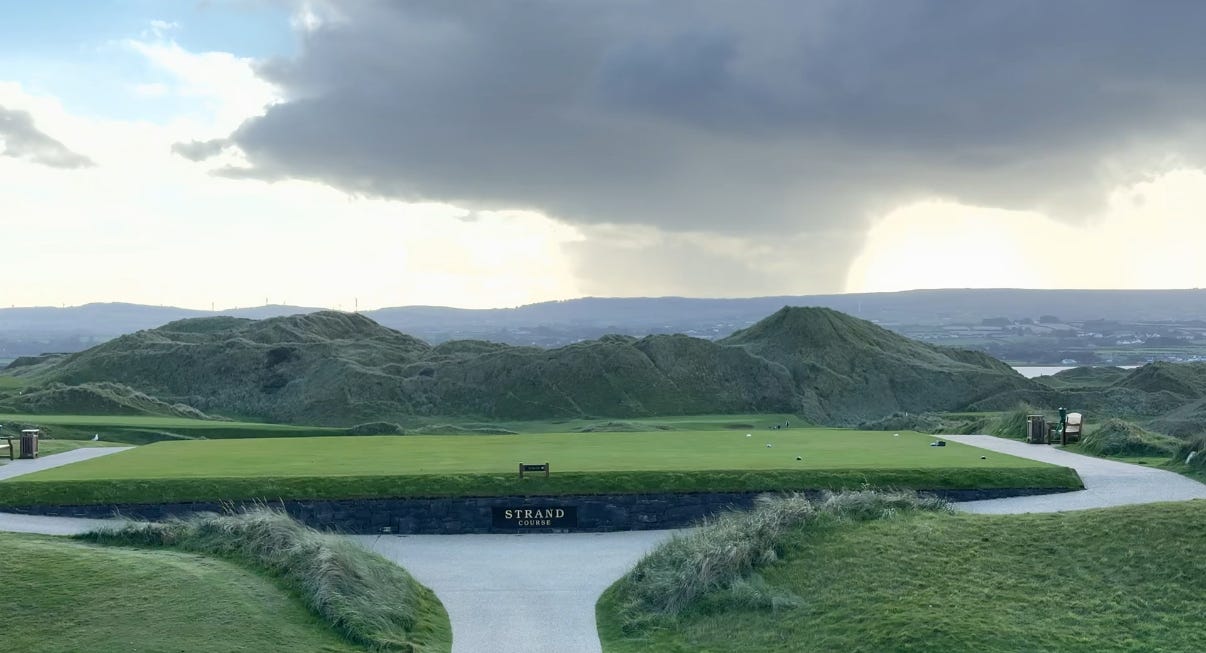
But that’s where the drama ended. You’d stand on that tee, draw breath, hit your drive and amble down the hill. After tapping in on the green, you’d glance at these spectacular dunes in front of you before turning away and making your way through a nice, but unspectacular piece of land for the rest of the round.
Thistly Hollow
But Des and the other members would often glance over to that incredible dune land called Thistly Hollow, right beside them while out for their Sunday morning stroll and think to themselves - what if...
The land had the most spectacular dunes you’ll see anywhere. Marram grass that would tower over you, the type of dunes that when the wind blows you would see the grass move like waves on the hill. It was even more eye-catching than anything at Portrush. But for years it was nothing more than a tease.
Then, one day in the 1980s, that very land went up for sale.
Portstewart took a calculated risk and bought it.
This was their chance to do what many members had whispered about to each other for years. If they used this land correctly it would bring their golf course to another level. The plan was to route 9 holes through the dunes.
The maths teacher’s gamble
In situations like this, it would be typical to reach out to some of the best golf course architects in the world - names like Pete Dye, Tom Fazio, Palmer or Nicklaus. But they didn’t do that.
The story goes that one day, Des Giffin walked the land of Thistly Hollow in a morning and mapped out the whole routing. He came back to the clubhouse and presented his idea - the exact design of holes 2 through 8, keeping 1 and 9 as they were. Tee shots that would start high and bring you down into valley’s in the fairway before coming back up again for greens.
After he presented his ideas, the club weighed it up. This would of course be cheaper in terms of consultancy fees than paying for someone like Pete Dye but it would also be a massive risk. If Des was just a naive, overambitious amateur who didn’t know what he was talking about, it would not only be a waste of good land but a waste of a lot of money.
But he didn’t get it wrong. Des Giffin, with the help of two others - Michael Moss and Bernard Findlay - designed possibly the best 9 holes of golf in Ireland.
Sunday morning. Raining. Worth it.
Last Sunday just after midday, my mate Joe and I made our way to the 1st tee of Portstewart. We were met by Ricky, the starter, who welcomed us and handed us a little gift from the club - a nip of Bushmills Whiskey and a bag tag bearing the name of Mr Giffin himself.
I could have done with taking a sip from the whiskey to shake off some cobwebs. A few pints at the Harbour Bar in Portrush the night before were still making their way out of my system. But I decided against it - long drive back to Wicklow that evening, best not to add to the damage
.
Ricky is one of those characters who when he speaks you listen. After he gave us some words of wisdom, I congratulated him on having the best office I’d ever seen. There are worse places to stand for 8 hours a day than the 1st tee at Portstewart.
The rain fell as Joe and I just tried not to hit it out of bounds. Joe ripped one down the middle. I took the conservative line left. Our usual fiver on the line.
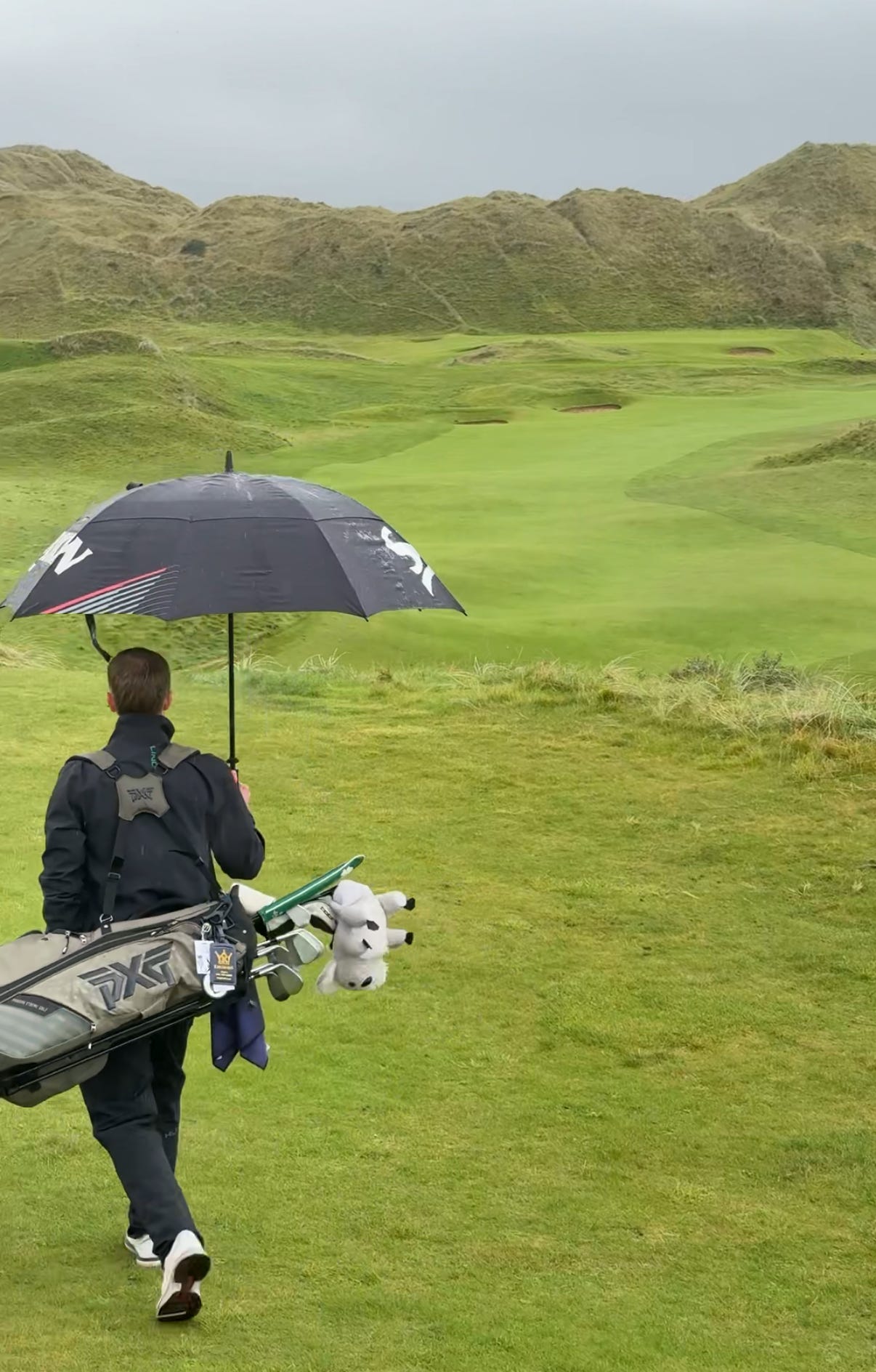
The front 9
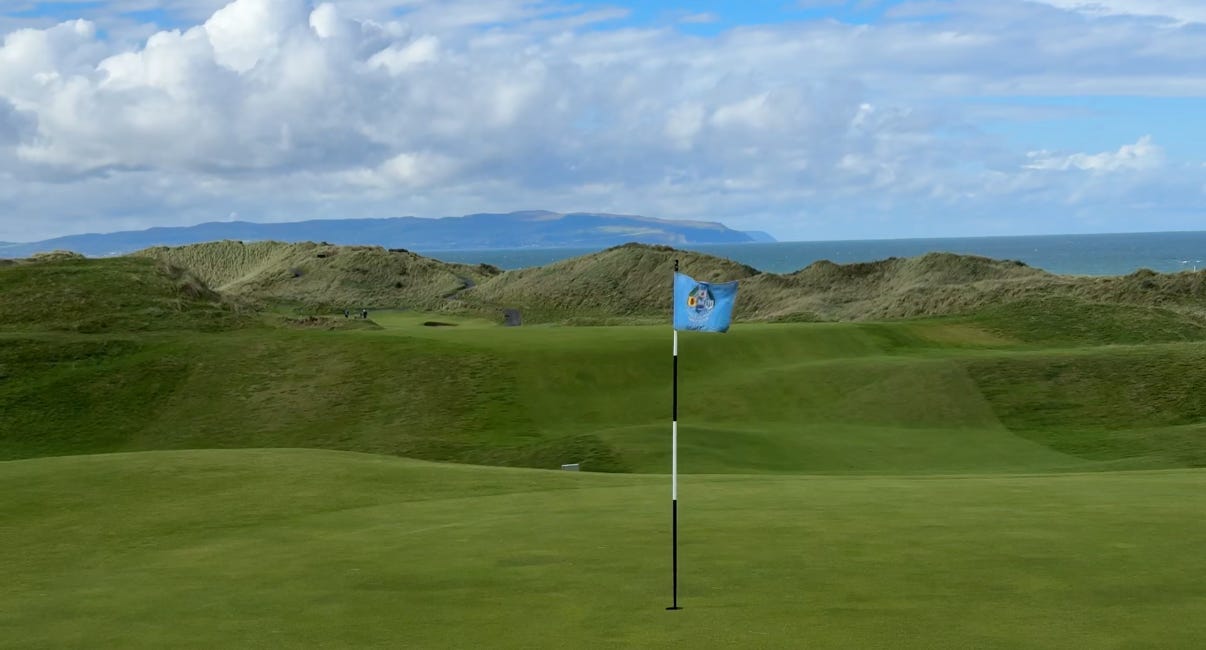
That front 9 is like nothing I’d ever seen before. The 1st tee gets all the credit but the 2nd, where Giffin’s work starts, is arguably just as good. My golf was about as shaky as my hands on those first few holes. I’ll blame the Guinness and The Harbour Bar.
I managed to chip one in for par on 2 but the fact that I was still chipping for par will tell you where my game was at.
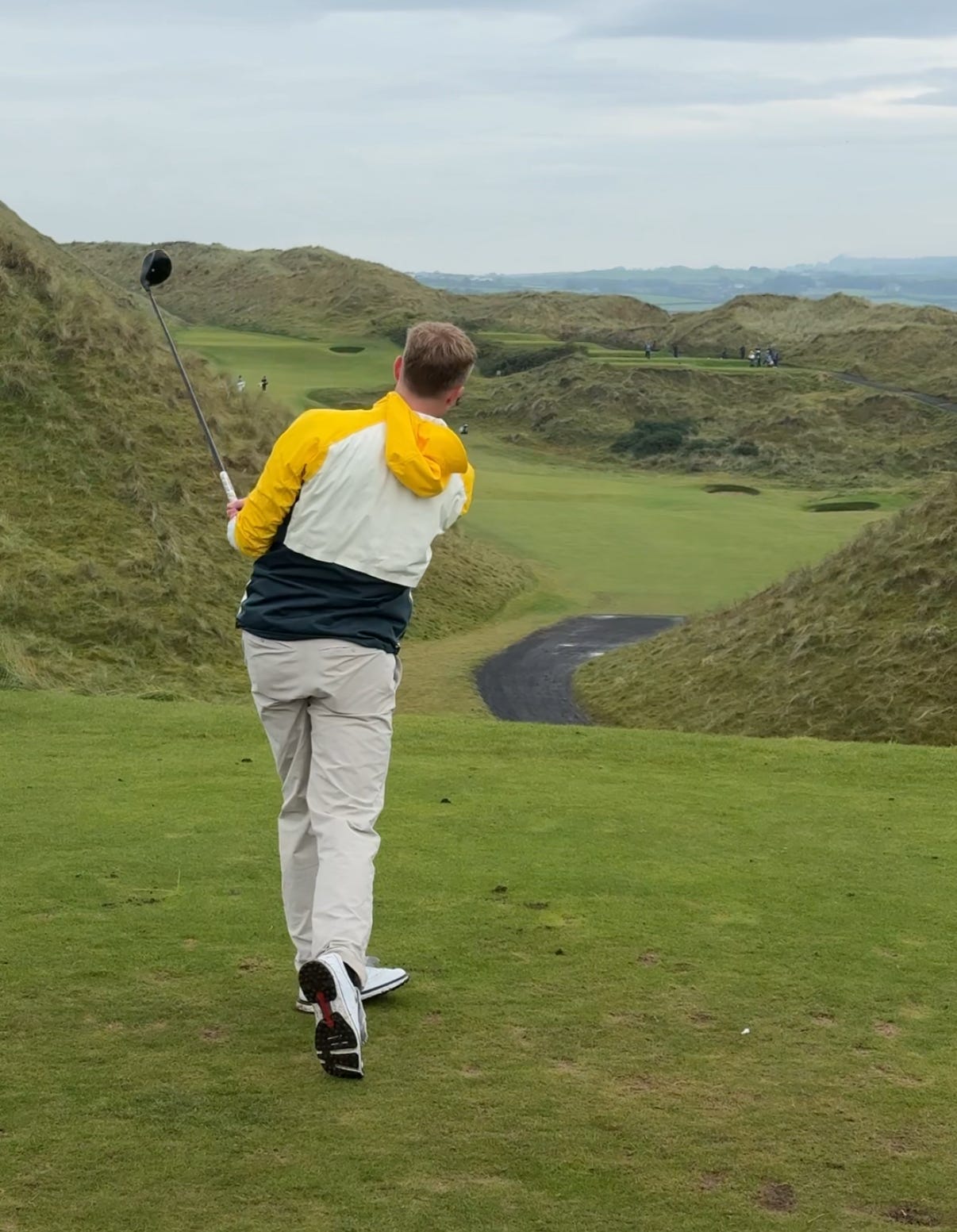
You meander through these dunes and stop so often just to take in your surroundings. Each hole is hidden from the next because 50 foot dunes divide them. Joe and I played off the blue tees but we would spot little tee boxes further back on certain holes and take a cheeky run back just to look at them. Each time it was worth it.
The 4th is a rollercoaster of a par 5 around and over some dunes with a green perched above you. Joe and I both lost some balls off the tee but when we made our way up that hill and tapped in for a gentleman’s half in 9s, we stood on the 5th tee and the whole course opened up in front of us - a river to the right, dunes to the left.
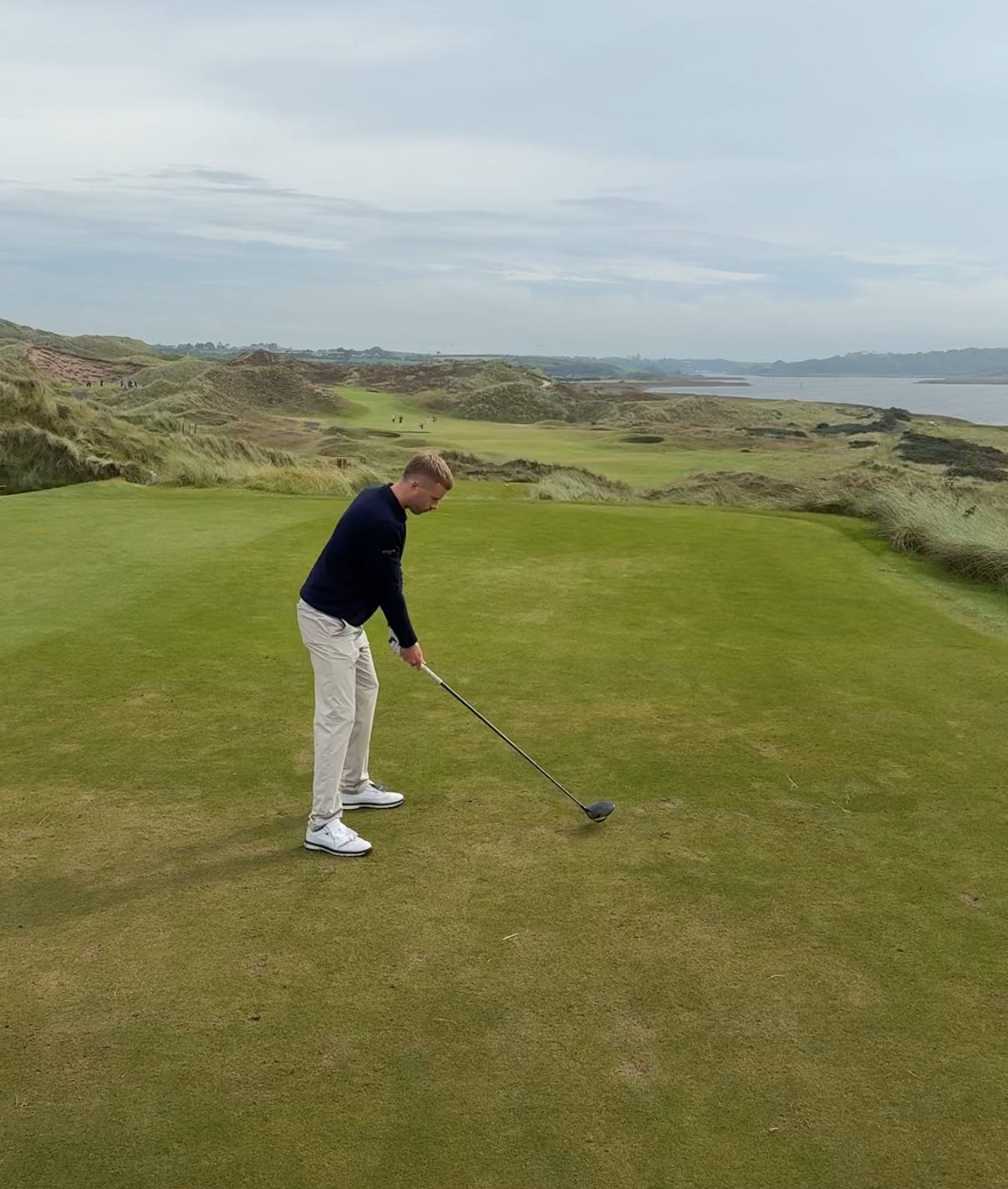
We settled down before the 6th, a short par 3 named after Giffin with a green known as the five penny piece. It’s not a green to miss.
A couple of pars and a birdie and I was bringing things back to a realm of respectability.
Most of us make our way through a golf course, head down looking for a ball, trying to advance it forward but I’d heard it said by some of the best architects in the world that when you stand on a green take a moment to look back from where you just came. Stand for a moment on the green and see where you’ve just come from. The course will reveal itself in a different way.
Do this if you ever get the chance to play Portstewart, you’ll see what I mean.
The best pint on any golf course in Ireland
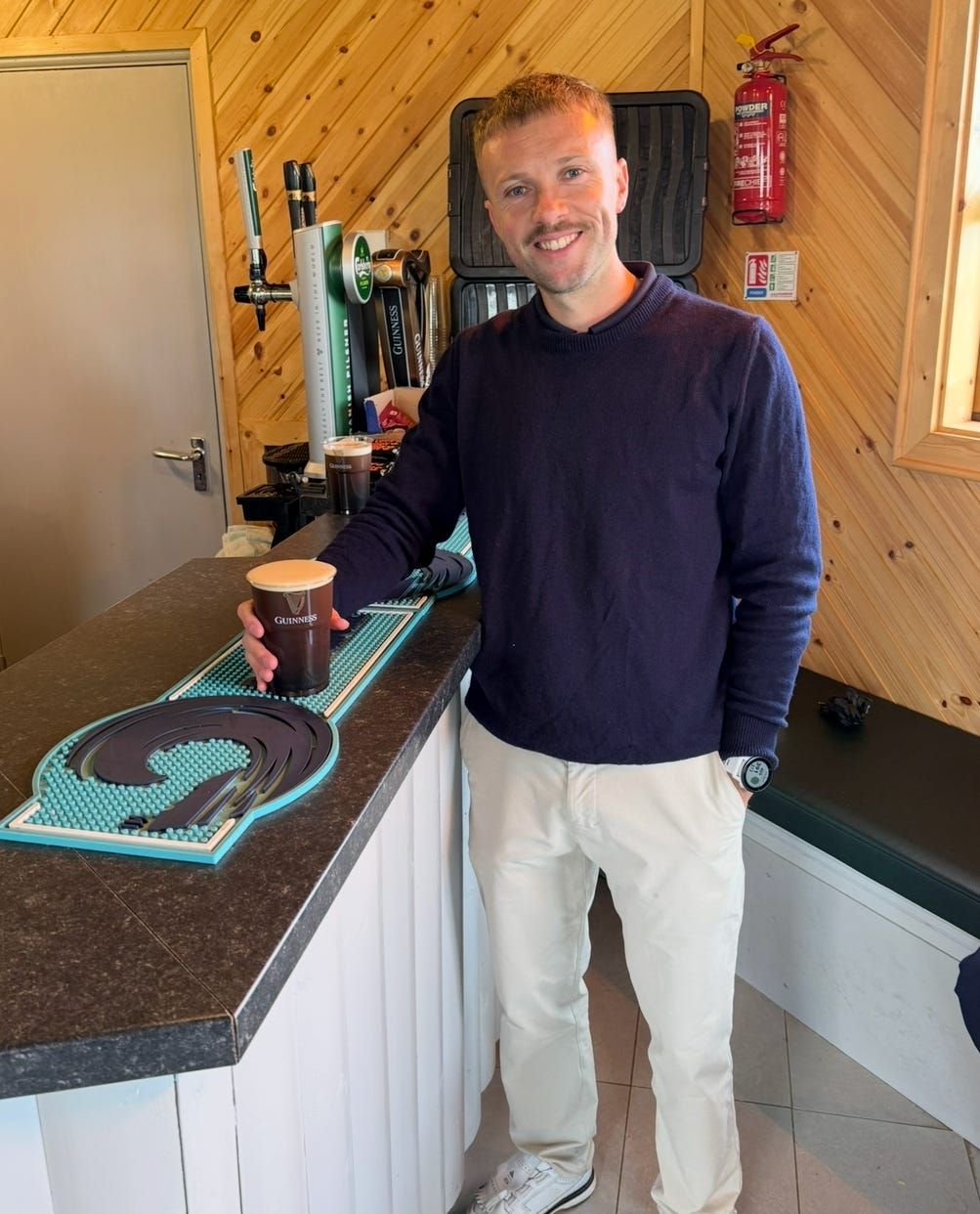
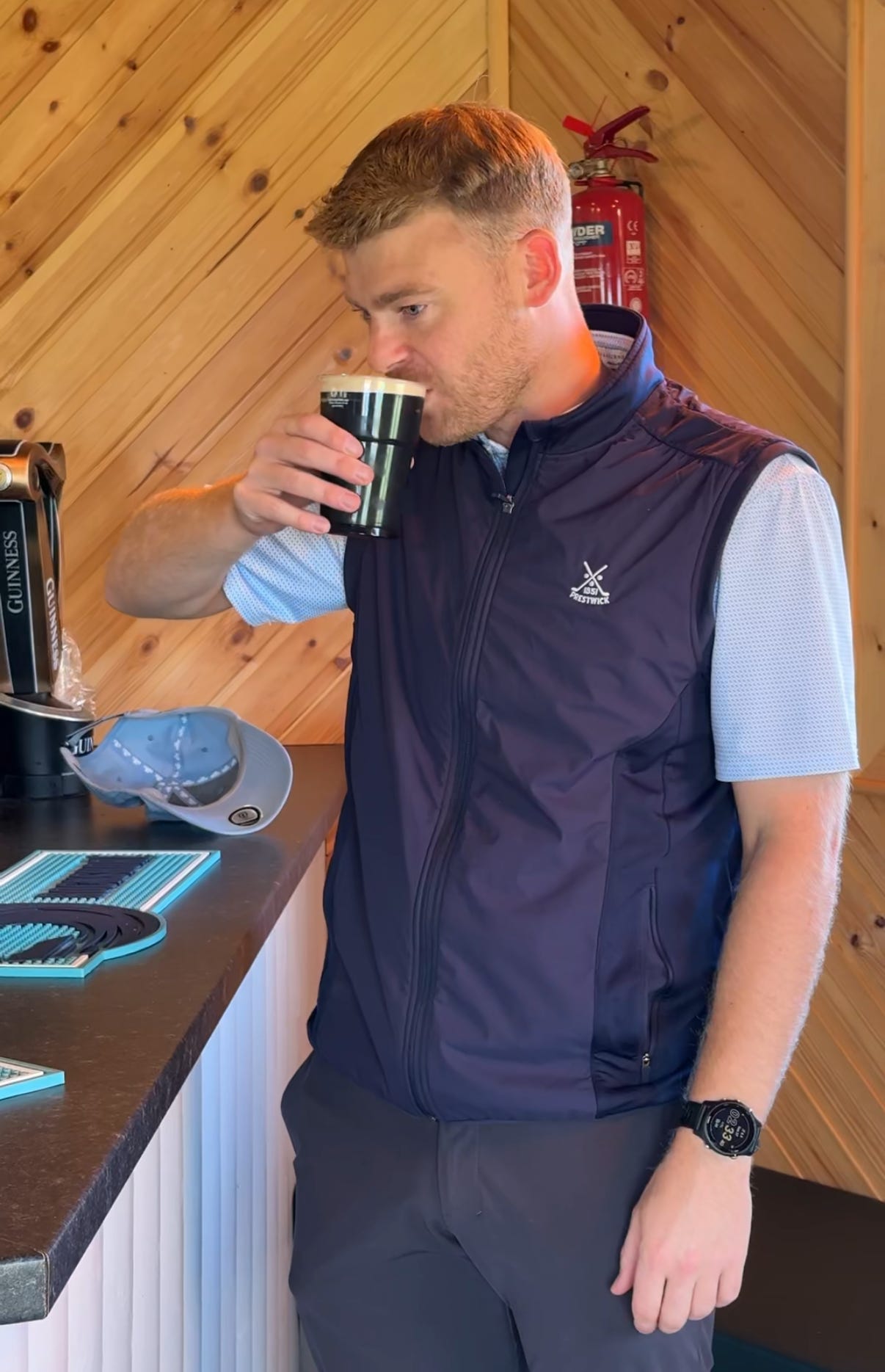
The halfway house at Portstewart is famous for having the best on-course pint of Guinness in Ireland. Joe and I can confirm - the Guinness is good. It comes at a good time too. A moment of reflection is required after those 9 holes.
The back 9
The back 9 often receives criticism because it is not quite at the level of the front. You come down to some flatter land but they have done serious work to enhance each hole in recent years and in my eyes have done a brilliant job. You can’t manufacture the dunes that nature gifted Giffin’s front 9 but the back 9 deserves more credit than it gets.
Our golf was average. The course kicked it out of us and a par of 73 doesn’t help your ego. Joe and I are 4 and 5 handicappers - decent on our day but certainly capable of losing some golf balls when it’s not. My 86 was enough to just about edge Joe. The fiver was mine.
No longer just the course beside Portrush
Portstewart is now ranked in the top 100 golf courses in the world and hovers around the top 10 on the island of Ireland. It hosted the Irish Open in 2017, where winner Jon Rahm described it as one of the most beautiful golf courses he’d ever seen. Portstewart is no longer “that course beside Portrush”. It stands alone as one of the very best.
With that acclaim has come visitor interest, employment for the area and revenue invested back into the course - including the upgrade of holes 16 to 18 completed in late 2025.
They have the local maths teacher of Coleraine Grammar, Des Giffin, to thank for that.
The Caddie’s Line
Portstewart is one of the courses on our Northern Ireland trip. If you want to play it - and after reading this you should - head to roam-golf.com/trips and get in touch. We will take care of everything.
The Read
The Anatomy of a Golf Course by Tom Doak. If this piece got you thinking about how golf courses are designed and why some work and some don’t, this is the book. Doak is one of the great modern architects - he designed St Patrick’s Links at Rosapenna, ranked 37th in the world - and this book breaks down exactly what separates a great golf course from a good one. Des Giffin would have loved it.