

When you think of Tiger you might think of the big moments – that chip in on 16 at Augusta in 2005. That putt on the 18th at Torrey Pines to get into a playoff for the 2008 US Open.
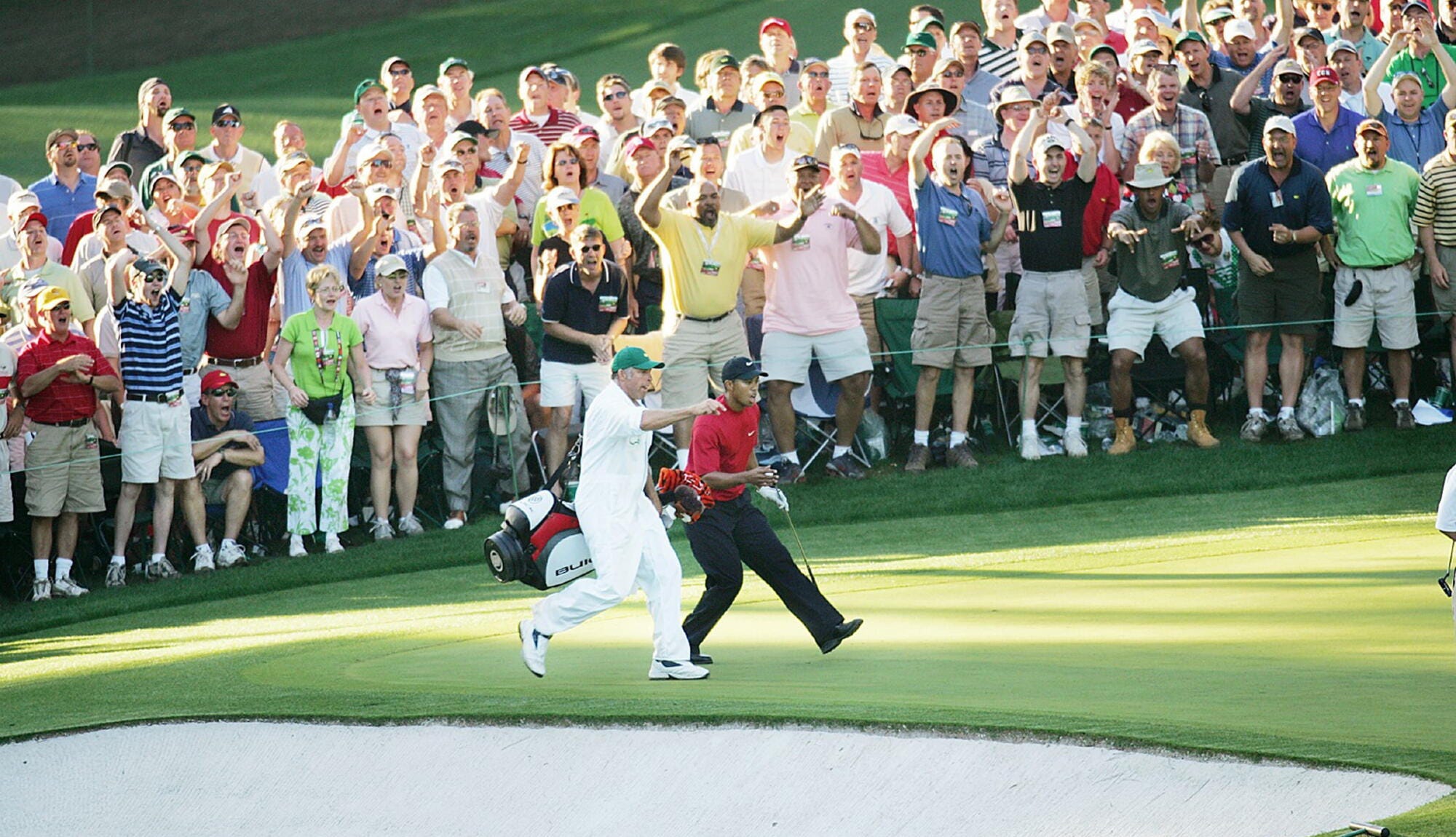
For me, sport is about moments and Tiger had more moments than anyone in the TV era.
But I’m also curious to understand what led up to these moments. The moments are what we as fans remember but what got him there?
He obviously has a case to make for the title of best golfer of all time but do we ever look at him and think, what can we learn from him? Or was he just so out of our league that it’s a futile exercise?
For me, that starts with asking a seemingly obvious question; what was Tiger Woods actually good at?
When asked about peak Tiger by those not old enough to have seen him play we could all probably give a soundbite on what makes him so great. Something like:
He was the best clutch putter in the world
His recovery skills were the best in the world
He just had an aura
These are all arguably true but according to the data, none of these things are actually what made him stand out from his peers - the aura helped but you can’t really measure that.
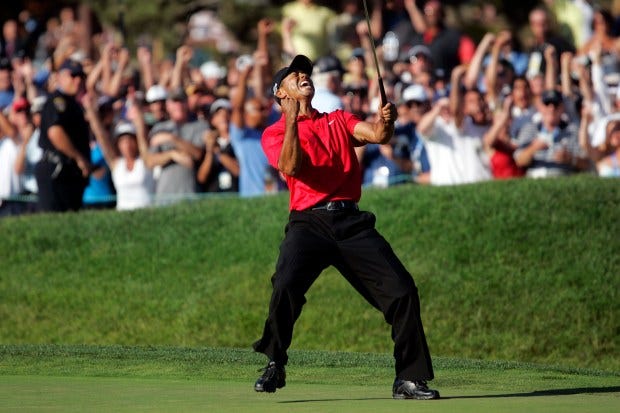
Take his recovery skills for example. Tiger hit some unbelievable recovery shots but according to the numbers, he was only about 1% better than the tour average in this particular area of the game. There were other things that moved the needle significantly more.
I’ve never actually found Tiger himself particularly good at explaining what he’s good at. To me, he’s the ultimate example of an athlete who can perform, but just can’t explain their performance to others in a way that’s actually helpful. Therefore, I feel the responsibility is on us to try to work out why he was so good rather than listen to his explanations.
Before I go into the details I just want to make sure that we’re on the same page - the point of this piece is not to offer advice. Rather, it’s my own curiosity. I’ve looked into it as best I could and I’m just reporting my findings.
I cannot and will not tell you what to take from it. What you do with this information is up to you.
Us weekend warriors
I played in our local Sunday competition last week and walked off with a feeling that I’m sure you’re familiar with - “I feel I played better than I scored”. This happens to me a lot and maybe it does for you too.
As I drove home I did the usual thing of counting all the shots that I should have saved, “if I didn’t 3 putt that hole” of “if I had just aimed away from that flag I would have made a par rather than a double” etc…
We all likely have a bias about how good we think we should have been versus the reality. We all feel like we “left shots out there” but sometimes, if I’m honest with myself I didn’t leave any shots out there, I’m just a bit shitter than I’d like to be.
However, after I got home from golf last I flicked open a YouTube video and came across this video about Tiger from Golf Digest on what actually made him so good and it caught my attention (big shout out to Golf Digest on producing some key stats).
Tiger was the ultimate player to get the most out of his game. Of course he was freakishly talented in a way that none of us will ever be but this video talked through some of the specifics of what actually made him as good as he was.
You could be cynical and just say, “hit it further, straighter and hole more putts” but I despise such simple cynicism. It sounds intelligent but really it’s just cowardice. It’s a cop out. If you pay close attention you can learn something here.
I digress.
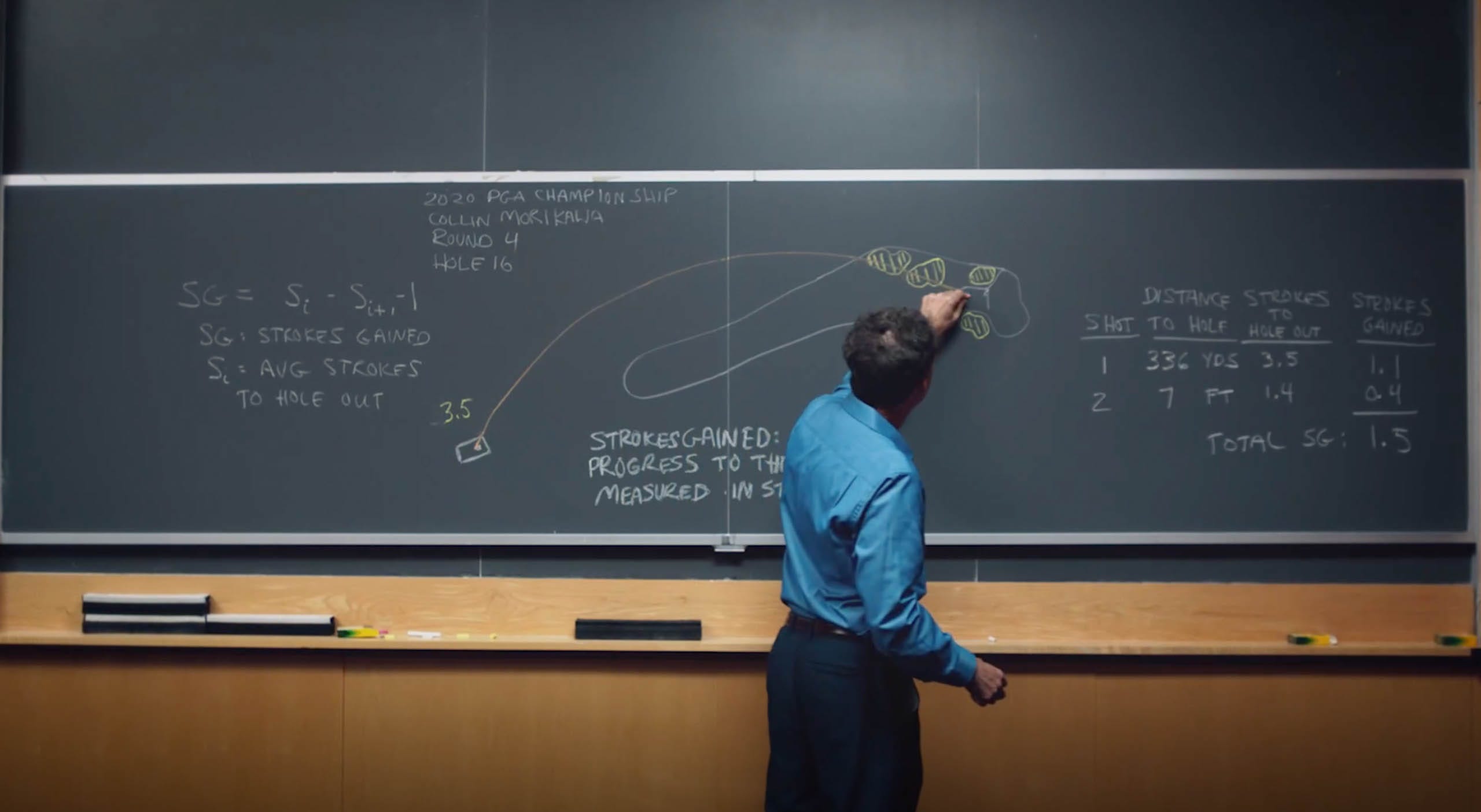
Strokes Gained - if you understand strokes gained feel free to skip to the next section
First things first - how are we measuring this?
You’ve likely heard the term “strokes gained” and although I’m certainly not an expert here, I’ll do my best to give a simple explainer of strokes gained as it’s an important frame to look through. If you know how strokes gained works then feel free to jump to the next section.
Back in the day, if you wanted to measure how good someone’s putting was for example, you might look at how many putts they took per round.
Let’s take John and Bill playing in a two-ball on a Sunday morning around your local course.
Let’s say John takes 36 putts in the round and Bill takes 32 putts in the round.
Immediately, you could say that Bill putted better than John but that doesn’t quite tell you the whole story.
What if John was an exceptional ball striker and hit all 18 greens in regulation in his round? That would mean John would have lots of putts from 20-30 feet. No matter how good you are, you’re not going to hole many putts from that distance. 36 putts means he 2 putted every hole - not bad if every first putt is from 25 feet.
Whereas say Bill is not a good ball striker and he missed all 18 greens in regulation so he’s left with a lot of chips and pitches around the greens. He chips his ball up to 5 feet on most holes and makes 4 of these putts.
Bill’s 5 footer for par is not the same as John’s 25 footer for birdie so each putt can’t carry the same weight.
A Columbia Business School professor called Mark Broadie came along in the early 2000’s and he put together a better way to measure golf stats called “strokes gained”. According to Broadie, if John had a 30 footer for birdie, he had about a 5% chance of making that putt. So if John makes that putt, he gains an average of 0.95 shots against everyone else in the field. That’s nearly 1 full shot.
You add all of these putts up over the round and you work out how many shots you either gained or lost against the average of the field that day.
Likewise, if you miss a 5 footer, you’ve actually lost 0.8 of a shot against the field. So going back to our example, Bill missed 14 of his 5 footers so despite having only 32 putts that day, he actually had a terrible day on the greens.
John’s 36 putts was therefore actually better than Bill’s 32 putts.
Strokes gained.
Back to Tiger
Using Mark Broadie’s clever stats we now know that there were 4 very specific things Tiger was better at than everyone else.
The percentage next to each one is roughly how much of his edge over the rest of the tour came from that one area.
Avoid The Big Miss - 22%
Hank Haney wrote this great book about his time coaching Tiger in the years 2004-2010 where he boiled down their entire goal down to one statement - avoid the big miss. Tiger was an athlete. He paved the way for golfers getting fit and strong and therefore he was long off the tee but he actually wasn’t always the longest. John Daly was longer than him. So why didn’t John Daly win everything?
Tiger knew length matters but if you miss big too often the distance gains aren’t actually worth it.
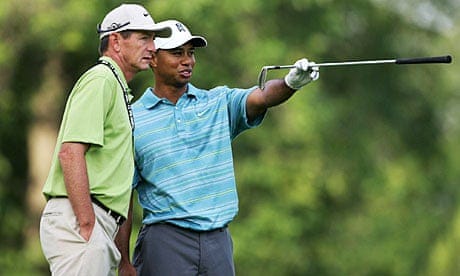
Off the tee Tiger gained 22% of his shots but he did this using what Luke from Golf Digest calls a “tee shot trade off strategy”, I.e. he hit less drivers and more 3-woods and stinger 2 irons despite having some of the highest clubhead speed. Thus he got the ball in play all the time and if he did miss, he would miss in the correct place.
Tiger figured out that golf isn’t necessarily about how good your good shots are, it’s about how good your bad shots are.
You’ve heard him say that he was able to win with his B game or even his C game. This is how.
Tiger was actually pretty wayward off the tee. He usually ranked about 150th in driving accuracy but the biggest thing he did was he very rarely hit it out of bounds or into a hazard. In fact, the PGA Tour average for hitting the ball out of bounds or in a hazard is they do it 1.3% of the time. Tiger did it 1.1% of the time. This may not seem like much but over a tournament and a season it’s very big.
You’ve probably heard about the 2000 Open Championship where he didn’t hit it in a single bunker over the course of the week. The Old course has 112 bunkers so over 4 rounds he missed 448 bunkers.
That’s a microcosm of his career.
He would hit it OB or have to take a penalty once in every 5 or 6 rounds on average. That’s slightly better than me I reckon.
This meant he didn’t prioritise hitting fairways, he prioritised missing disaster areas and because he was longer than average, he could avoid hitting driver.
This doesn’t automatically mean you should put the driver away, in fact if you’re not pretty long already, the data says don’t do that. Again, we must be careful to learn the right lesson here.
Distance control - 20%
Tiger was arguably the best iron player to ever live but what made him so good was his distance control. With his irons, he hit it at least pin high 90% of the time. I definitely do not do this.
Obviously he was a supreme ball striker so he could rely on consistently striking it well but he actually knew his distances better than anyone. I think this is low hanging fruit for me anyway, I could only roughly tell you how far I hit each club.
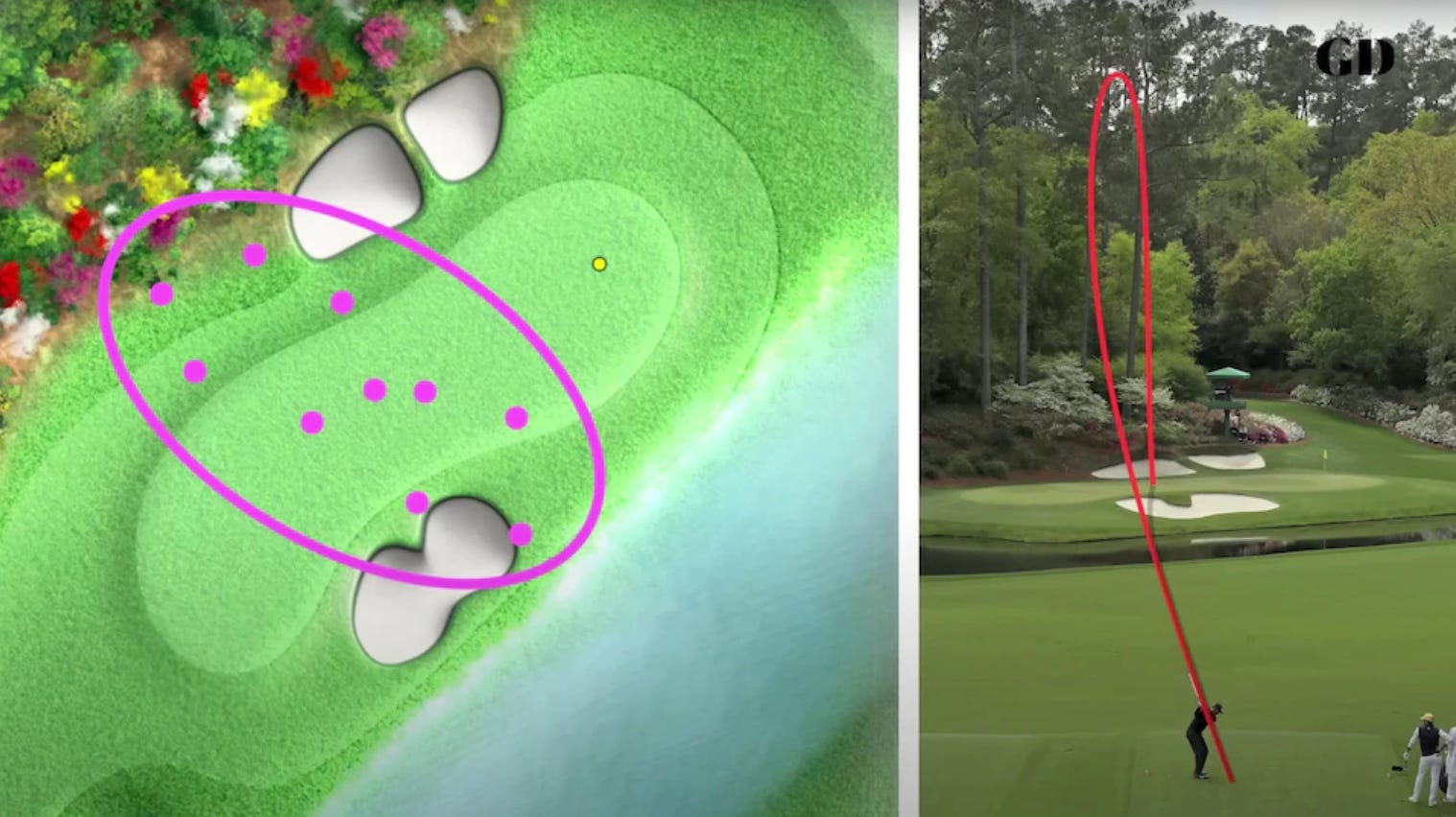
Tiger was aggressive to targets 20 feet from each flag. He knew how to attack sucker pins by always working the ball towards pins, i.e. if it was a front right pin, he would aim left and fade it towards it. The ball would pitch in the middle of the green and spin towards the flag. Gaining a few valuable feet when the ball landed.
He knew he wouldn’t pull that shot off every time but usually the ball would work slightly closer to the flag when it landed and because his distance control was so good he could pull this off.
His average distance from the flag from 150-200 yards was 25 feet.
So the big takeaways here are:
He aimed 20-30 feet from flags
He shaped the ball towards every flag, i.e. hitting a fade and draw depending on what was required (this is hard for us amateurs)
Got the ball to at least pin high 90% of the time
Par 5’s (11%)
We’ve established that Tiger was longer than most on tour and although this helped him, it wasn’t the only thing that helped him score better than everyone else on par 5’s.
Tiger used a strategy on par 5’s called “place then push”. Again, you would think Tiger was just the longest off the tee so he could go for more par 5’s in 2 and although his length helped he actually didn’t necessarily attack par 5’s with his drive. He did it with his 2nd shots.
Tiger always made sure to put the ball in play off the tee on par 5’s so that he could then go for the green in 2 with his 2nd shot. Tiger was excellent with his 3 wood and long irons and used a “low riser” ball flight with these clubs meaning they would land with more spin and control but he could only do this by getting himself in play off the tee.
Putting from 7-21 feet (10%)
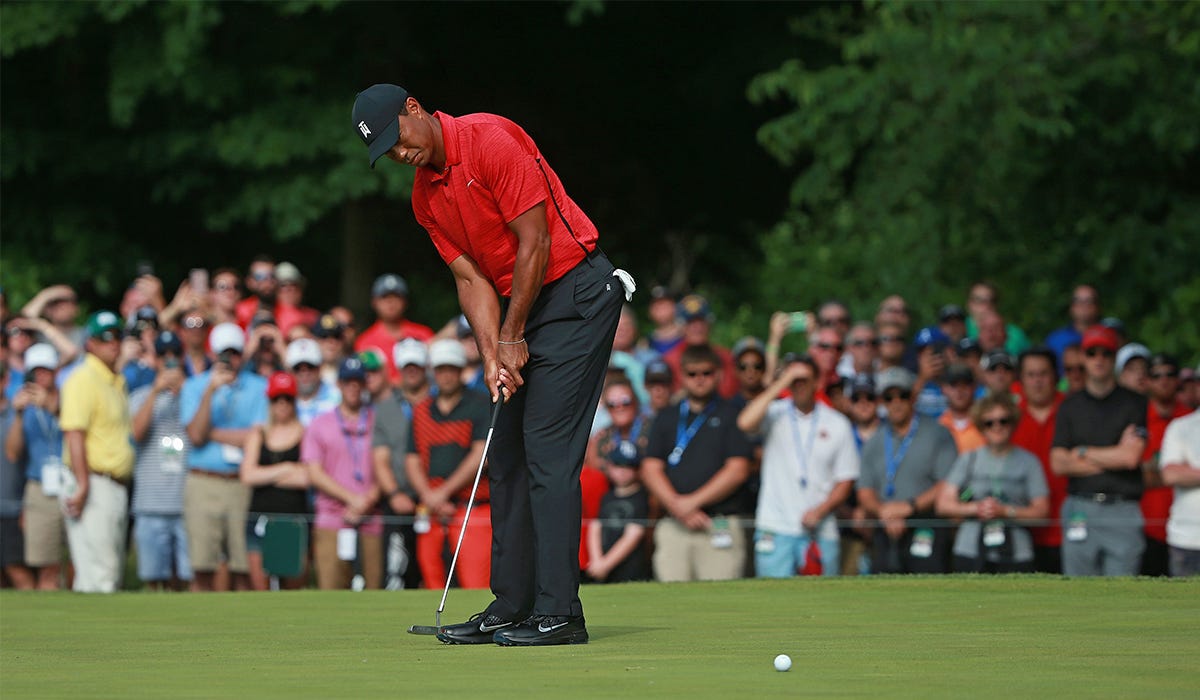
Tiger also employed a really interesting strategy with his putting. Whenever he had putts from 7-21 feet he would attack them, knowing that his make % on the way back if he missed was going to be really high. This means he would be really aggressive with 10 footers, never leaving them short.
Again, Tiger was a better putter than all of us but according to the data he made more putts than anyone from 7-21 feet but he also rarely left them short.
My takeaway from all of this
Those four were the biggest moves, adding up to close to two thirds of his edge over the tour. The rest was made up of lots of small things, like the recovery shots we talked about earlier. They were spectacular and we remember them, but they weren’t where most of the gains came from.
Can we actually learn anything from all of this?
The biggest thing that resonated with me is that he knew his flaws as much as his strengths and played to them. There’s some stuff I know about my game intuitively but there’s lots I probably don’t know that well and I feel like I should do a much better job of analysing it.
To summarise, here’s what I learned:
Tiger avoided the big miss better than anyone
He prioritised hitting his irons the right distance and was happy to aim 20-30 from flags
He got it in play off the tee on par 5’s then was aggressive with his 2nd shot
He was aggressive from 7-21 feet with his putts
He knew his flaws and worked around them
I’m a big believer that golf is a game to be explored and that the score doesn’t always matter but equally, we’re all competitive and want to shoot the best score possible.
Whatever you want to take from this, I think it’s also ok to just step back and admire the golfer, whatever you think of the rest.
Those iconic moments only arrived because of a stacking of smaller moments that the rest of us may not have paid attention to.
I think that’s a philosophy we can all live by.
The Read: The Big Miss by Hank Haney - incredible insight to what it was like working and being close to Tiger. Borderline too personal if you ask me - Hank probably overshared but a fascinating read.
The Caddines Line: Tiger’s biggest philosophy was that it’s not about how good your good shots are, it’s about how bad your bad shots are.
that is a good read! thanks!
Gawf, Tiger was good at it.